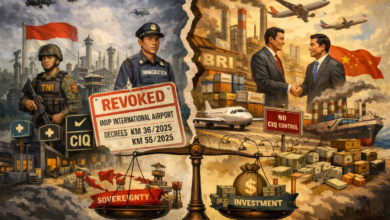


International flying feels effortless on the passenger side. You book a ticket, show a passport, and a few hours later you step into another country. Behind that smooth experience sits a surprisingly complex legal system.

International flights are regulated through a mix of international treaties, global technical standards, and national laws, all designed to solve one big problem: aviation crosses borders constantly, but legal authority does not. So how does it work when one aircraft, registered in one country, flies through multiple sovereign airspaces and lands in another?
The Starting Point: States Control Their Airspace
The core principle is simple and strict: each country has sovereignty over the airspace above its territory. That means foreign aircraft do not have an automatic right to enter. International flight depends on permission, coordination, and shared rules.
This is why international aviation law is built on cooperation. Countries want connectivity and economic benefits from aviation, but they also want safety, security, and control over who enters their airspace.
The Legal Backbone: The Chicago System
Modern international flight regulation is rooted in the Convention on International Civil Aviation (Chicago Convention, 1944). This treaty established the legal foundations of international civil aviation and created the International Civil Aviation Organization (ICAO).

ICAO’s key role is standard-setting. It develops Standards and Recommended Practices that guide how states regulate safety, airworthiness, licensing, air traffic management, airport operations, and accident investigation. ICAO does not “police” every flight directly. Instead, states implement ICAO standards through their own laws and oversight systems. The result is a global baseline: not identical rules everywhere, but enough harmonization to allow safe cross-border operations.
Who Regulates What? The Division of Responsibilities
International flight regulation works because responsibilities are divided across several actors:
The State of Registry is the country where the aircraft is registered. It has primary responsibility for things like airworthiness oversight and ensuring the aircraft meets regulatory requirements.
The State of the Operator is where the airline is based and certified. This state oversees the airline’s operations, including safety management, training systems, and operational approvals.
The States Overflown and the State of Destination control their airspace and airports. They can impose operational requirements, set route structures, require permits in certain contexts, and enforce local rules for entry, security, and airport procedures.
In practice, international flights depend on these responsibilities aligning without contradiction. That alignment is exactly what international standards are meant to support.
Market Access: Why Some Flights Exist and Others Don’t
A common misunderstanding is that if an airline has an aircraft and a route, it can simply start flying internationally. It cannot.
The commercial right to carry passengers and cargo between countries typically depends on air services agreements between states. These agreements determine which airlines can fly, how often, and under what conditions. They also shape competition and pricing more than many passengers realize.
This is why international flight networks reflect policy choices, not just geography and demand.
Safety Oversight and Trust Between States
International aviation relies heavily on trust. When a country issues a pilot license or certifies an airline, other countries need confidence that the oversight behind that certification is credible.

To support this, the global system includes auditing and oversight mechanisms and encourages transparency in safety performance. The goal is not to embarrass states. It is to maintain a baseline level of safety and prevent weak oversight in one place from becoming a risk everywhere.
Passenger Rights and Liability: When Things Go Wrong
Regulation is not only about preventing accidents. It also covers responsibility when harm occurs.
International frameworks influence airline liability for passengers, baggage, and cargo in cross-border travel. While the details can vary by route and jurisdiction, the purpose is consistent: to provide a predictable legal framework that protects passengers and allows airlines to manage risk through insurance and compliance.
Security and Border Rules: Aviation Meets Immigration and Customs
Even when a flight is technically legal and safe, passengers still face another layer of regulation: immigration, customs, and security rules.
These are national rules, enforced at borders, but coordinated internationally to keep travel workable.This is why international flying sits at the intersection of aviation law and border governance. Airports are not just transport hubs; they are legal gateways.
New Pressures: Technology, Cyber Risk, and the Environment
International flight regulation is evolving. Digital systems are now central to aviation operations, creating cybersecurity vulnerabilities that regulators increasingly take seriously. Unmanned aircraft and evolving airspace management concepts are testing existing assumptions about who can use which parts of airspace. Environmental pressures are also shaping policy, as states and industry face growing expectations to reduce emissions and noise impacts.
The regulatory system’s challenge is to adapt without breaking what already works: a global network built on common standards and mutual confidence.