Flight Delays and Breach of Contract: To What Extent Does the Airline Reimburse? A Legal Overview Under Indonesia Civil Code

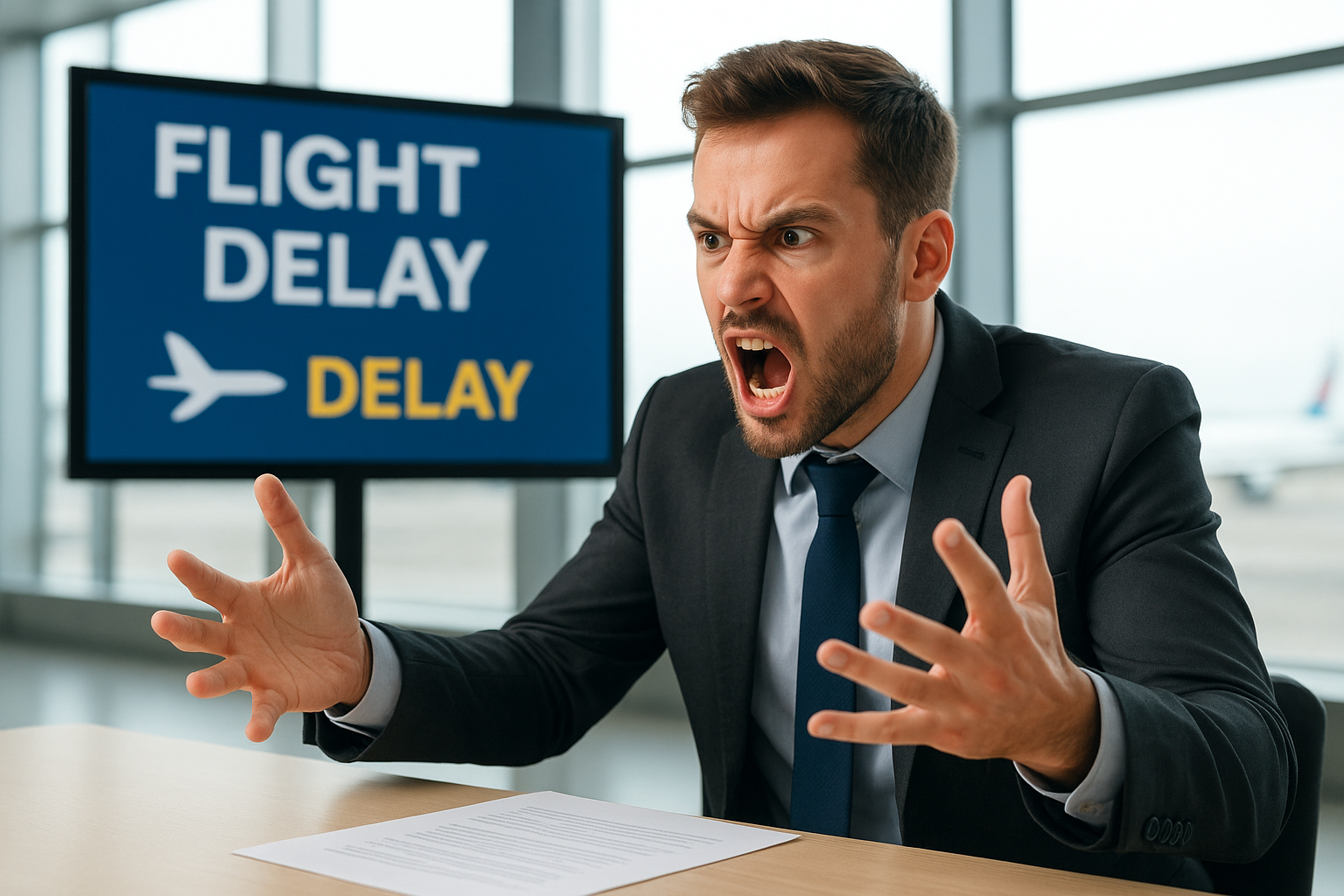
Imagine a passenger who has an important appointment, for example: a business meeting or a job contract signing, scheduled shortly after their flight’s arrival. However, the flight is significantly delayed, causing the passenger to miss the appointment. As a result, the agreement is cancelled because one of the parties (in this case, the passenger) was unable to attend. Consequently, the passenger loses the potential benefits they were supposed to gain from that agreement. This raises the question: Can the loss of expected profit (known in legal terms as “loss of potential gain”) be claimed as compensation from the airline? And to what extent can a flight delay be considered a breach of contract under the Indonesian Civil Code (Burgerlijk Wetboek, “KUH Perdata”)?
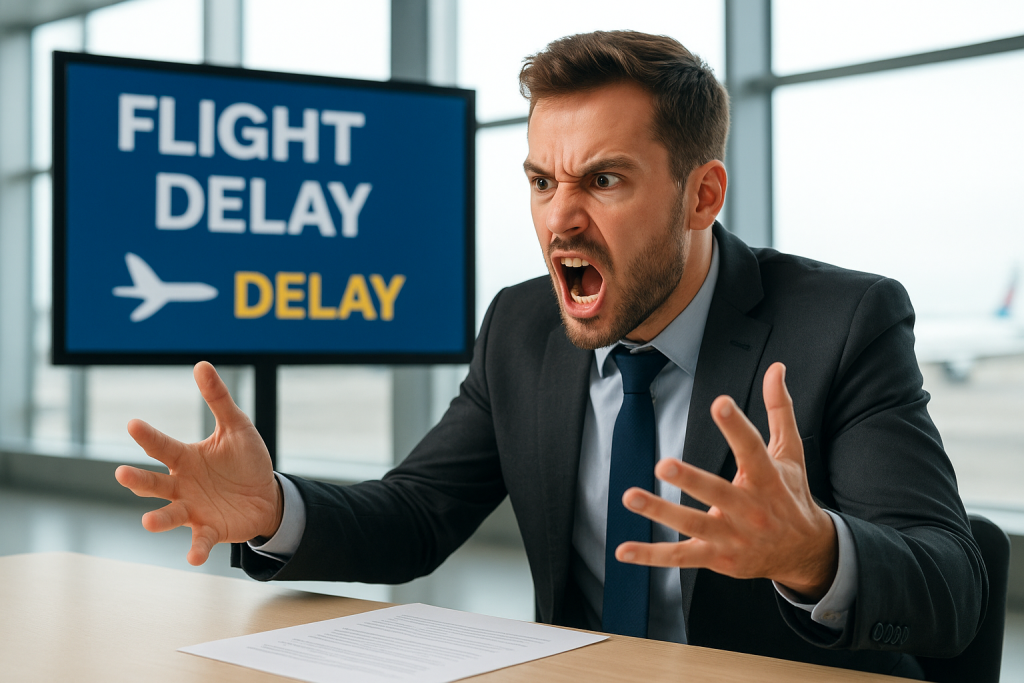
The regulation that governs airline responsibilities for delays in Indonesia is Minister of Transportation Regulation (Peraturan Menteri Perhubungan/Permenhub) No. 89 of 2015 concerning the Handling of Delays in Scheduled Commercial Air Transport Services for Domestic Flights. According to Article 2 of Permenhub No. 89 of 2015, airlines are required to handle delays properly and provide compensation to passengers when delay occurs. The regulation explicitly states that airlines are obligated to provide certain forms of compensation depending on the duration of the delay that has occurred. These categories are outlined as follows:
- Category 1: 30 to 60 minutes; light refreshments.
- Category 2: 61 to 120 minutes; snacks and beverages.
- Category 3: 121 to 180 minutes; a heavy meal.
- Category 4: 181 to 240 minutes; full meal and snacks.
- Category 5: More than 240 minutes; monetary compensation of Rp300.000,00.
- Category 6: Flight cancellation; option to refund the full ticket price or rerouting at no extra charge.
These forms of compensation are standardized and generally apply only to direct inconveniences suffered by passengers, such as hunger, fatigue, or wasted time at the airport. They are not designed to cover Indirect or consequential damages, such as loss of business opportunities, missed contracts, or reputational harm. In the hypothetical case of the missed business appointment, the passenger suffers a consequential loss, one that does not fall within the direct scope of the compensation outlined in Permenhub No. 89 of 2015. While the Rp300.000,00 compensation might suffice for general inconvenience, it is far from adequate to cover tens of millions of rupiah in potential lost income or deal cancellations. This is where the Indonesian Civil Code comes into play.

The passenger may argue that the delay constitutes a Breach of Contract (Wanprestasi) under Article 1243 of the Indonesian Civil Code, which defines breach as: “…the failure to perform an obligation at the agreed time, in the agreed manner, or not at all.” In this case, the contract of carriage (purchase ticket) implicitly guarantees the timely delivery of the passenger to a specific destination. When the airline fails to meet this obligation, particularly for reasons within its control (e.g., poor crew management, lack of aircraft readiness), it may constitute wanprestasi. However, airlines are not automatically liable for all delays. If the delay is caused by factors beyond the airline’s control, such as extreme weather, air traffic congestion, or airport operational issues, the airline can invoke force majeure (keadaan memaksa) to avoid liability. Permenhub No. 89 of 2015 also recognizes these exceptions, such as delays caused by natural disasters or security issues.
Furthermore, under both international and Indonesian aviation practice, airline liability is also contractually limited by the conditions of carriage of each carrier. Almost all airlines explicitly exclude liability for consequential loss or indirect loss suffered by passengers, including lost business opportunities, reputational damage, or anticipated profits. For instance: Garuda Indonesia’s Passenger and Baggage Carriage Requirements Article 15(4)(3) stipulates that the airline is not responsible for indirect or consequential damages. TransNusa Conditions of Transport Clause 11.4.2 contains a similar exclusion. ANA (All Nippon Airways) Passenger and Baggage Carriage Requirements Article 20(D)(5) also provides that the carrier is not liable for loss of profit or other consequential damages. With these clauses in place, even though passengers may theoretically bring a claim under wanprestasi (Article 1243 KUH Perdata) or unlawful act (Perbuatan Melawan Hukum, Article 1365 KUH Perdata), airlines are contractually shielded from responsibility for consequential loss.
However, if the airline’s action falls short of contractual obligations or reasonable service standards, the passenger may also consider filing a claim based on Article 1365 KUH Perdata, which addresses Unlawful Acts (Perbuatan Melawan Hukum): “Every act that unlawfully causes harm to another obliges the person by whose fault the harm was caused to compensate for it.” Under this provision, a passenger can attempt to recover actual damages, including lost profits, by proving: (1) There was an unlawful act (e.g., negligence in managing the flight schedule); (2) The act caused harm (missed opportunity); (3) There is a clear causal link between the airline’s fault and the loss suffered. This type of claim would require strong evidence (e.g., proof of the cancelled business contract, proof of the financial value lost, and documentation of the delay and its cause).
In summary, standard compensation provided by Indonesian Aviation Regulations does not cover lost profits or missed business opportunities. While airlines are obligated to provide basic reimbursement under Permenhub No. 89/2015, passengers suffering more substantial losses must pursue civil remedies under the Indonesia Civil Code, particularly Article 1243 (Wanprestasi) and 1365 (Perbuatan Melawan Hukum), passengers may bring a lawsuit. However, due to the broad exclusion clauses contained in the conditions of carriage, airlines generally disclaim liability for consequential loss. This makes the likelihood of successfully claiming compensation for lost profit very limited, unless the passenger can demonstrate gross negligence outside the scope of such contractual exclusions.
***
Bertrand Elyo is an Intern Staff and Research Assistant for Space Law and Policy Research Programme at the Centre for Air and Space Policy (CASP). He also a third year Undergraduate Law Student at Universitas Surabaya. His academic interests include investment law, space law, aviation law and private international law.