
The Legal Status of State Aircraft in Indonesia after Indonesia Civil Aviation Act of 2009 and Government Regulation No. 32 of 2021

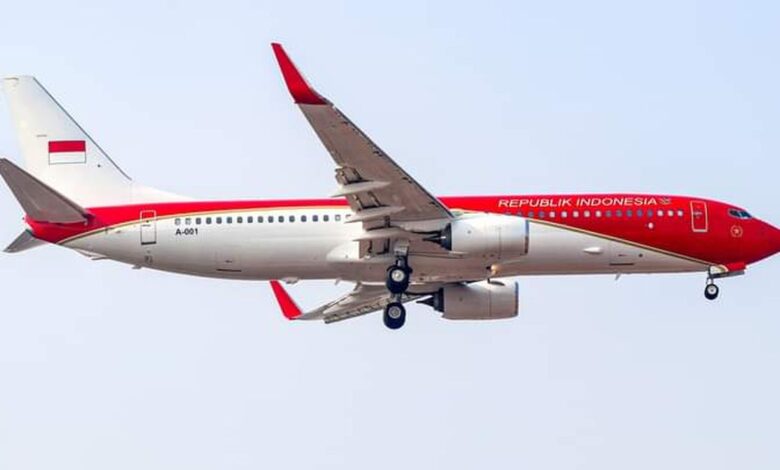
A dedicated Government Regulation on state aircraft is therefore essential to ensure legal clarity, effective coordination, and compliance with Indonesia’s international aviation obligations
Liana Alissya Azirul/Indonesia
Indonesia’s Civil Aviation Act (Law No.1 of 2009), recognizes state aircraft and requires its provisions to be implemented through a Government Regulation. The law aims to establish clear rules on identification, airworthiness, and the operational use of state aircraft. To implement UU 1/2009, the Government enacted Government Regulation No.32 of 2021 on Administration of Civil Aviation (Government Regulation No.32 of 2021), which regulates key aspects of aviation including airworthiness, airport operations, and aviation safety. This raises a critical legal question: does Administration of Civil Aviation Policy fulfill the mandate of Article 70 of Indonesian Civil Aviation Act, or does a regulatory gap remain?
Civil Aviation Act and Administration of Civil Aviation Policy
Indonesian Civil Aviation Act distinguishes state aircraft from civil aircraft and sets out specific provisions for the former. Article 1(7) defines state aircraft as those operated by the Indonesian National Armed Forces, the National Police, Customs, and other government agencies for official purposes. Articles 67–69 regulate airworthiness, identification, limited civil transport, and approval for foreign state aircraft operating within Indonesian airspace. Article 70 expressly mandates further regulation through a Government Regulation.
Government Regulation No.32 of 2021 has implemented the mandate from Indonesian Civil Aviation Act however, it only addresses civil aviation. It regulates aircraft registration, airworthiness, flight operations, navigation, safety management, airport operations, and tariffs. Articles 12–16 govern registration and limit registration of government-owned aircraft not used for law enforcement missions, while Articles 17–21 delegate airworthiness and certification matters to Ministerial Regulations. As a framework regulation, Government Regulation No.32 of 2021 repeatedly relies on Ministerial Regulation for technical details. Although consistent with Article 5 (2) of the 1945 Constitution, it does not mention state aircraft and recognizes only civil and Indonesian aircraft. Accordingly, it does not fulfill the mandate of Article 70.

Legal Hierarchy, Inconsistency, and Consequences
In Indonesia’s legal hierarchy, an Act ranks above a Government Regulation, which in turn ranks above a Ministerial Regulation. Where an Act expressly requires a Government Regulation, ministerial rules alone are insufficient. Article 70 of Indonesian Civil Aviation Act requires a Government Regulation specifically governing state aircraft. Previously, Government Regulation Number 3 of 2001 on Aviation Safety and Security (Government Regulation No.3 of 2001) addressed state aircraft by delegating operational and registration matters to relevant ministers. However, it was issued under the repealed Indonesian Civil Aviation Act of 1992. Although Government Regulation No.32 of 2021 does not formally revoke Government Regulation No.3 of 2001, it effectively supersedes it in civil aviation matters, creating a structural inconsistency as follows Indonesian Civil Aviation Act of 2009 mandates regulation of state aircraft, however Government Regulation No.32 of 2021 only recognizes civil aviation, and Government Regulation No.3 of 2001 no longer provides a valid legal basis.
In practice, the absence of a dedicated regulation leaves state aircraft subject to fragmented ministerial or institutional rules. Each agency, Defense, Police, Customs applies its own procedures, complicating coordination in shared airspace. The Government Regulation No.32 of 2021 only acknowledge civil aircraft and provides no standards for military or law enforcement aircrafts. Article 13 excludes law enforcement aircraft from civil registration, confirming their distinct status without establishing a national framework. As a result, coordination between civil air traffic control and state aircraft depends on internal arrangements rather than unified regulation. This gap also affects Indonesia’s compliance with Article 3 bis of the Chicago Convention, which requires states to regulate aircraft interception and ensure civil aviation safety in relation to state aircraft.
The Government Regulation No.32 of 2021 functions as a general civil aviation framework, not a regulation for state aircraft. While it appropriately delegates technical matters to ministers, it does not define state aircraft or establish procedures for identification, registration, civil ATC coordination, or liability and compensation. References to government-owned aircrafts remain incidental, and aviation is otherwise treated primarily as a civil matter. Accordingly, Government Regulation No.32 of 2021 does not amount to substantive compliance with Article 70 of Indonesian Civil AViation Act.
To address this gap, the government should issue a dedicated Government Regulation on state aircraft. This regulation should define state aircraft, regulate registration and identification, establish coordination procedures with civil ATC, and provide a framework for airworthiness exemptions, liability, and third-party compensation, while taking Indonesia’s international obligations into account. Existing ministerial and institutional rules should then be harmonised under this framework. A formal civil-military coordination mechanism under the Ministry of Transportation should oversee operational and safety matters. These measures would reduce legal uncertainty, improve coordination, and align national aviation law with international standards.
A dedicated Government Regulation on state aircraft is therefore essential to ensure legal clarity, effective coordination, and compliance with Indonesia’s international aviation obligations.
***
Liana Alissya Azirul is a third year undergraduate student at the Faculty of Law, Universitas
Airlangga, enrolled in the International Undergraduate Program. She is pursuing the International Law
concentration, with academic interests in international criminal law in aviation and public
international law.