
This unprecedented tragedy demonstrates the urgent need for stronger, binding, and globally harmonized aviation liability rules to ensure consistent accountability and justice for victims and their families in the future.
Nur Izzatun Najwa/Malaysia
THE MH370 TRAGEDY
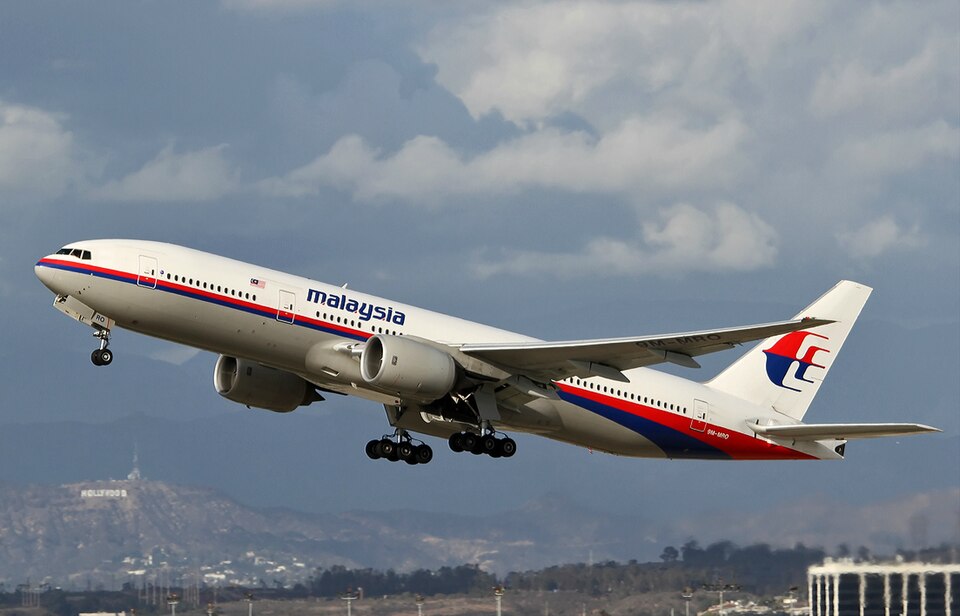
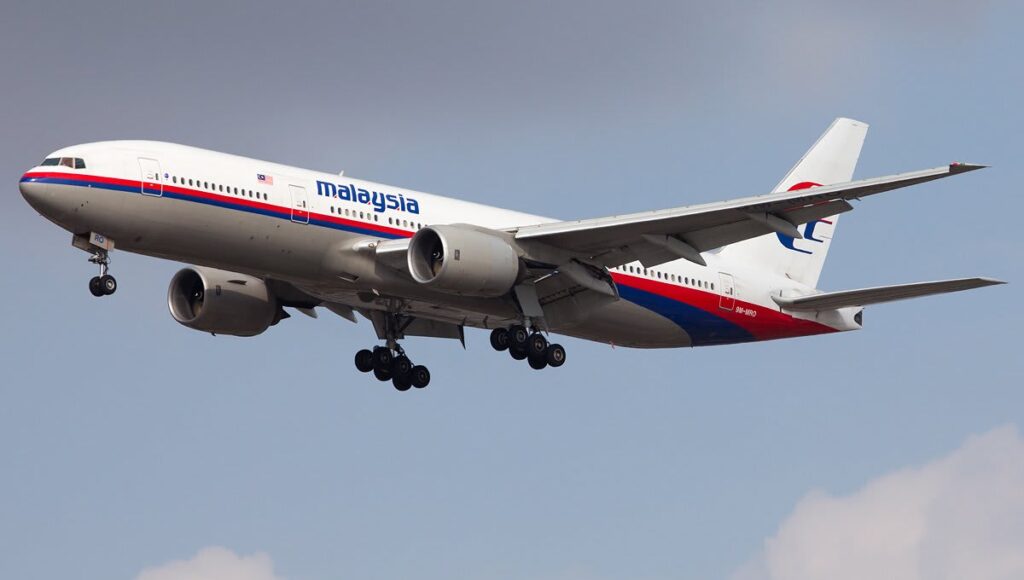
The Malaysia Airlines Flight MH370 vanished mysteriously on 8 March 2014 from Kuala Lumpur to Beijing with 239 people on board became one of the most unprecedented tragedies in the history of commercial aviation. Despite extensive international search efforts, the aircraft’s main wreckage and flight recorders which became the main evidence remain missing until now. This unfortunate and unprecedented incident has sparked questions about liability, passenger compensation and the adequacy of international aviation law in dealing with this complex event.
This tragedy raised complex legal problems concerning liability, passenger compensation and the adequacy of international aviation law. This paper examines how existing legal frameworks, particularly the Warsaw Convention 1929, the Montreal Convention (1999) and the IATA Inter-Carrier Agreement (1995) govern airline liability in such circumstances with MH370’s mysterious disappearance as a case study.
EVOLUTION OF INTERNATIONAL AVIATION LIABILITY REGIMES
The growth of international air travel has brought numerous complex problems and challenges particularly in relation to the liability of air carriers for passenger injury, delay or even mystery loss of airlines. Over time, several major international conventions have been adopted to establish uniform rules and address the growing complexities of airline liability, beginning with the Warsaw Convention (1929), which became the foundational legal framework governing international air carriage, particularly in relation to passenger injury, baggage and cargo damage. This framework was later revised through the Hague Protocol (1955), which amended key provisions of the Warsaw system, and further supplemented by the Guadalajara Convention (1961), which clarified the allocation of liability in situations involving both contracting and actual carriers.
THE WARSAW SYSTEM AND ITS LIMITATIONS IN CONTEMPORARY AIR CARRIAGE
The Warsaw Convention became the cornerstone of aviation law in the 19th century as a treaty among the nations acting as an international Bill of Rights for passenger and cargo claims. The Convention was signed on October 1929 in Warsaw and came into force on February 1923 to ensure uniformity in law rules governing international carriage by air towards the passenger, baggage and cargo, define liabilities of air carriers in cases of injury, death and loss or damage during such carriage and to standardize legal procedures such as documents and tickets for claims arising out of international carriage.
It applies to international carriage by air of persons, baggage or goods for reward and carriage by air transport undertaking. This Convention held that the carrier is liable for any accidents causing injury or death of passengers and loss or damage of baggage and cargo. However, such liability is limited whereby there are monetary limits on the amount carriers must pay which is 125,000 gold francs for personal injury.
MODERNIZATION THROUGH THE MONTREAL CONVENTION (1999): LIABILITY, COMPENSATION, AND PASSENGER RIGHTS
Subsequently, a new convention was adopted to replace the Warsaw Convention (1929) and a plethora of other conventions and protocols that came into existence after it. That is when the Hague Protocol (1955) comes into light. The Hague Protocol (1955) officially known as Protocol to Amend the Convention for the Unification of Certain Rules Relating to International Carriage by Air was signed in 1955 in the Hague and came into force on 1 August 1963.
The Hague Protocol (1955) introduced important amendments to the Warsaw Convention by modernizing several provisions and increasing liability limits for passenger injury or death, although its partial ratification created legal uncertainty for states applying different versions of the Warsaw system. This fragmented framework was later consolidated by the Montreal Convention (1999), which replaced earlier instruments and established a comprehensive, modernized liability regime for international air travel. The Montreal Convention increased carrier liability, introduced a strict two-tier system eliminating the need to prove wilful misconduct to exceed compensation caps, expanded passenger rights, and provided broader jurisdictional options, thereby promoting uniformity, accessibility and the consistent development of international air transport law.
Malaysia ratified the Montreal Convention in 2008 through the Carriage by Air (Amendment) Act 2007, incorporating it as the main legal framework governing international air carrier liability. The Convention establishes a two-tier liability system for passenger injury or death, with the first tier imposing strict liability up to 113,000 SDR under Article 21(1) for damages arising from an accident occurring on board or during embarkation or disembarkation, as defined in Article 17(1). Beyond this threshold, Article 20 allows the carrier to avoid or limit liability by proving that the damage resulted from the negligence or wrongful act of the passenger or claimant. Although this structure aims to ensure fair and accessible compensation, the absence of physical evidence in the MH370 tragedy made it nearly impossible for families to pursue claims beyond the strict liability tier, as no conclusive facts exist to establish fault, negligence or the cause of the incident.
LEGAL UNCERTAINTY IN MH370: IMPACT OF ABSENT PHYSICAL EVIDENCE ON LIABILITY CLAIMS
In the case of MH370, this system makes it difficult to put the liability. While families could access compensation under the strict liability tier, they were unable to pursue higher claims because of the complete lack of physical evidence and conclusive findings. Without knowing whether the incident was caused by pilot error, terrorism, technical issue or external factors, there was no clear legal basis to prove the fault of the airline which forbade them from moving beyond the first tier of compensation.
THE ROLE OF THE IATA INTER-CARRIER AGREEMENT (1995) IN SUPPLEMENTING LIABILITY GAPS
Prior to the Montreal Convention (1999), the IATA Inter-Carrier Agreement on Passenger Liability 1995 (IIA) was introduced as a response to the outdated and inadequate liability limits contained within the Warsaw Convention and its subsequent amendments. The amended Warsaw Convention last revised in 1955 had become insufficient to reflect the economic reality of modern air travel and the value of human life. IIA works as an “umbrella accord” via voluntary airlines which agreed to waive the restrictive liability established under the Warsaw Convention, The Hague Protocol and the Montreal Convention 1966. The signatory carriers undertook three principal commitments such as waive limitation of liability in Article 22(1) of the Warsaw Convention for claims of death or bodily injury under Article 17, allow recoverable compensatory damages and no defence under Article 22(1) for claims not exceeding 100,000 SDR.
The relevance of the IIA to the MH370 incident lies in its practical application by Malaysia Airlines as a signatory to the agreement. Although the agreement does not explicitly mentioned in the conditions of carriage, the airline specifically states that it will not invoke any limitation of liability in cases of death or bodily injured and will not avail itself of any defence to that portion of the claim not exceeding 113,100 SDR which reflects the limit stated under Article 24(2) of the Montreal Convention. This shows the adherence of Malaysia Airlines to the IIA’s principles which placed the airline within a regime of strict liability.
In the case of MH370, this obligation had direct implications for passenger compensation. Taking into consideration the absolute absence of physical evidence and a lot of uncertainty surrounding the aircraft’s mysterious disappearance, it would have been highly impossible for the families of victims to establish negligence or wilful misconduct against the airline. Therefore, IIA played a pivotal role to ensure the airline bore an equitable degree of responsibility and liability and the families were able to claim compensation without the heavy burden of proof lies upon them.
Hence, IIA 1955 was a crucial move toward providing better rights to passengers and fills the lacunae between the old Warsaw system and the latest Montreal Convention. However, due to its nature of voluntary action, the agreement is limited and inconsistent. IIA 1955 gave the MH370’s families a fairer way to claim for damages although it still solely depends on the voluntary participation of the airline rather than a binding treaty.
JURISDICTIONAL COMPLEXITY AND CODE-SHARING IMPLICATIONS IN MULTINATIONAL AVIATION TRAGEDIES
Another significant challenge in determining liability for MH370 is jurisdictional complexity. Article 33 of the Montreal Convention grants the claimants several choices for bringing actions including the carrier’s domicile, principal place of business, place of contract or the passenger’s destination. The multinational composition of MH370’s passengers, including individuals from China, Malaysia and Australia, created significant uncertainty regarding which legal authority and jurisdiction should govern the resulting claims. No single court possessed comprehensive jurisdiction over all affected parties, making coordinated legal action across multiple systems essential yet difficult to achieve. This complexity hindered efforts to determine liability and delayed compensation for victims’ families.
The situation was further complicated by the flight’s code-sharing arrangement: although MH370 was operated by Malaysia Airlines, it was marketed by China Southern Airlines, meaning that passengers who bought tickets from China Southern were effectively flying on a Malaysia Airlines aircraft. Under Articles 39 to 44 of the Montreal Convention, both the contracting carrier (China Southern) and the operating carrier (Malaysia Airlines) may be held liable, a system designed to expand passenger protection but challenging to enforce across differing carriers and jurisdictions. As a result, MH370 demonstrates how overlapping jurisdictions and code-sharing agreements can significantly complicate the determination of airline liability in international aviation law.
STRENGTHENING INTERNATIONAL AVIATION LAW: LESSONS FROM MH370
In conclusion, the mysterious disappearance of Malaysia Airlines Flight MH370 revealed the structural limitations of international aviation law in addressing complex, cross-border tragedies. Despite the establishment of conventions like Warsaw, Montreal and the IATA Inter-Carrier Agreement sought to harmonize rules on airline liability, their effectiveness remains constrained by inconsistent ratification, voluntary compliance and overlapping jurisdictions.
The multinational nature of MH370 and the involvement of multiple airlines under code-sharing agreements further complicate the determination of liability. This unprecedented tragedy demonstrates the urgent need for stronger, binding, and globally harmonized aviation liability rules to ensure consistent accountability and justice for victims and their families in the future.
***
Nur Izzatun Najwa is a second year Bachelor of Law (LLB) student in Universiti Teknologi MARA (UiTM) Shah Alam. She is currently undertaking a one semester exchange program in Faculty of Law, Universitas Airlangga.